
Walk down any pet store aisle and you’ll see dozens of dog food bags, all claiming to be the best option out there. It’s genuinely confusing, and most of that confusion comes down to one thing: dogs don’t eat the same way their whole lives. This dog nutrition guide breaks down exactly what your dog needs at each life stage, from wobbly-legged puppy to slowing-down senior.
If you’ve read our dog care guide for beginners, you already know the basics of settling a new dog into your home. This guide goes deeper into one specific piece of that puzzle, feeding your dog properly, because getting nutrition right early on affects almost everything else, from energy levels to long-term health.
Why Life Stage Actually Matters for Dog Nutrition
A growing puppy and a ten-year-old dog have completely different nutritional needs, even if they’re the exact same breed. Puppies need more calories and protein to fuel rapid growth, while senior dogs often need fewer calories but more support for joints and digestion.
Feeding a one-size-fits-all diet across your dog’s entire life sounds convenient, but it usually means either overfeeding an older dog or underfeeding a growing puppy, neither of which does them any favours.
01. Feeding Puppies (Birth to 12 Months)
Puppies grow at an astonishing rate, and their bodies need considerably more protein, fat, and calories per pound than adult dogs. This is also the stage where bones and joints are developing, so the right balance of nutrients matters more than at any other point in their life.
What to do: Choose a food specifically labelled for puppies or “all life stages”, feed smaller meals three to four times a day rather than one or two large ones, and avoid free-feeding since puppies can easily overeat without realising it.

02. Feeding Adult Dogs (1 to 7 Years, Varies by Breed Size)
Once your dog reaches adulthood, growth slows down and their nutritional needs shift toward maintenance rather than rapid development. This is usually the longest life stage, so getting the daily routine right here matters a lot.
What to do: Switch to a quality adult dog food appropriate for your dog’s size, feed two measured meals a day rather than leaving food out constantly, and adjust portions based on activity level rather than just following the bag’s generic guidelines.
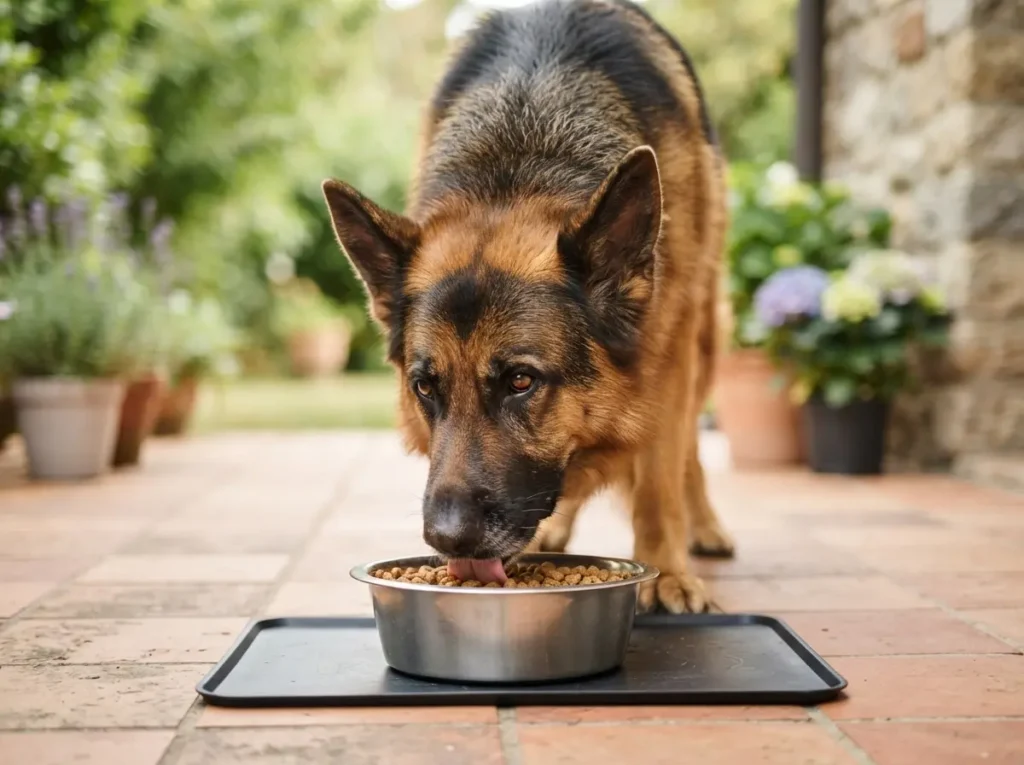
03. Feeding Senior Dogs (7+ Years, Earlier for Large Breeds)
As dogs age, their metabolism naturally slows down, and many become less active, which means the same portions that worked for years can suddenly lead to weight gain. Joint support and easier digestion also become bigger priorities.
What to do: Look for senior-specific formulas with added joint support like glucosamine, reduce portion sizes slightly if your dog has become less active, and watch their weight closely since extra pounds put more strain on ageing joints
Adult Dog Feeding Tips
- Choose food designed for adult dogs.
- Follow recommended portion sizes.
- Adjust portions based on activity level and body condition.
- Keep treats within a reasonable amount of the daily diet.
- Make sure fresh water is available at all times.
Regularly checking your dog’s weight can help you identify whether their portions need adjustment.

04. Understanding What’s Actually in Dog Food
Ingredient lists can be genuinely overwhelming, full of terms that sound impressive but don’t tell you much on their own. A few basics go a long way toward reading labels more confidently.
What to do: Look for a named protein source, like “chicken” or “salmon”, as the first ingredient rather than vague terms like “meat by-products”, and check that the food meets standards set by an organisation like the Association of American Feed Control Officials (AAFCO).
Senior Dog Feeding Tips
- Monitor your dog’s weight regularly.
- Choose food appropriate for their age and health.
- Keep them properly hydrated.
- Avoid excessive treats and table scraps.
- Schedule regular veterinary checkups.
Older dogs can develop health conditions that affect their dietary needs, so it’s especially important to discuss major diet changes with your veterinarian.
05. Foods That Are Genuinely Dangerous for Dogs
Some everyday human foods are far more dangerous to dogs than most people realise, and a few can be fatal even in small amounts. This is worth knowing regardless of what life stage your dog is in.
What to do: Keep chocolate, grapes and raisins, onions and garlic, and xylitol (found in many sugar-free products) completely out of reach, and when in doubt about a specific food, don’t share it.
06. How Much Water Your Dog Actually Needs
Water gets overlooked constantly, but proper hydration affects digestion, energy, and overall health just as much as food does, especially for dogs eating mostly dry kibble.
What to do: Keep fresh water available at all times, wash the bowl daily to prevent bacteria buildup, and pay closer attention to hydration during hot weather or after exercise.
07. Should You Ever Switch Your Dog’s Food?
There are legitimate reasons to change your dog’s food, such as moving between life stages, a vet recommendation, or a food that’s no longer agreeing with them. But switching abruptly almost always causes stomach upset.
What to do: Transition to a new food gradually over seven to ten days, mixing increasing amounts of the new food with decreasing amounts of the old one, and watch for any signs of digestive upset along the way.
Dog Nutrition Guide: Quick Checklist
- Feed puppies smaller meals more frequently with a puppy-specific formula
- Switch to adult food once growth slows, with two measured meals a day
- Move to senior food with joint support as your dog ages
- Check for a named protein source as the first ingredient
- Keep chocolate, grapes, onions, and xylitol out of reach
- Keep fresh water available and wash the bowl daily
- Transition between foods gradually over seven to ten days
If you’re still working through the basics of a new dog, our dog care guide for beginners and puppy toilet training guide cover the rest of what you’ll need in those first few months.
Frequently Asked Questions
What is the best food for dogs?
The best food depends on your dog’s age, size, activity level, and individual health needs. A complete and balanced food appropriate for your dog’s life stage is generally a good starting point.
How often should I feed my dog?
Feeding frequency depends on the dog’s age, size, and individual needs. Puppies generally need more frequent meals than adult dogs.
Can dogs eat human food?
Some human foods can be safe for dogs in appropriate portions, but many are unhealthy or toxic. It’s best to check whether a particular food is safe before giving it to your dog.
Do senior dogs need special food?
Some senior dogs benefit from food formulated for older dogs, while others may need dietary changes based on their individual health. Your veterinarian can help determine what’s appropriate.
Should dogs always have access to water?
Yes. Dogs should generally have access to fresh, clean drinking water throughout the day.
Final Thoughts
A good dog nutrition guide isn’t about finding one perfect food and sticking with it forever; it’s about adjusting what and how much you feed as your dog moves through different life stages. Puppies need fuel for growth, adults need consistency, and seniors need a bit more support.
When in doubt about portions or a specific dietary need, your vet is always the best resource, especially for dogs with health conditions or unusual activity levels. Nutrition isn’t something you have to get perfect on day one, just something worth paying attention to as your dog grows and changes.