
Cat food aisles are just as confusing as dog food ones, maybe more, since cats are pickier and their nutritional needs are stricter in some ways. This cat nutrition guide breaks down exactly what to feed your cat at each life stage, from bottle-fed kittens to slower-moving seniors, so you’re not just guessing based on whatever bag looks nicest.
If you’ve read our cat care guide for beginners, you already know the basics of settling a new cat in. This guide goes deeper into one specific piece, feeding, since diet affects nearly everything else about a cat’s health and behaviour.
Why Cats Need a Different Diet Than Dogs
Cats are obligate carnivores, which is a bit stricter than it sounds. Unlike dogs, cats can’t produce certain nutrients on their own, like taurine, and they genuinely need meat in their diet to survive, not just as a preference.
This is exactly why cat food and dog food aren’t interchangeable, even in a pinch. A diet that’s fine for a dog can actually lead to serious deficiencies in a cat over time.
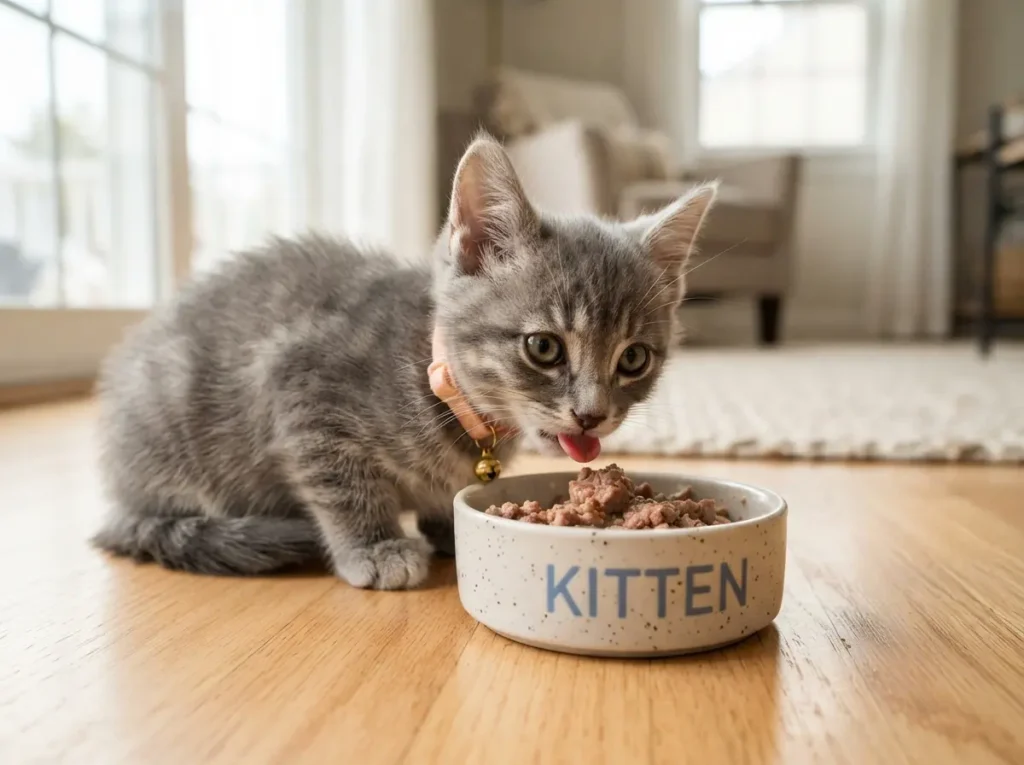
01. Feeding Kittens (Birth to 12 Months)
Compared to adult cats, kittens’ bodies require significantly more protein, fat, and calories per pound due to their rapid growth. Nutrition is more important at this stage than at nearly any other since it coincides with the development of their immune and skeletal systems.
What to do: Choose a food specifically formulated for kittens, feed small meals three to four times a day, and keep kittens on kitten food until they’re around 12 months old rather than switching too early.
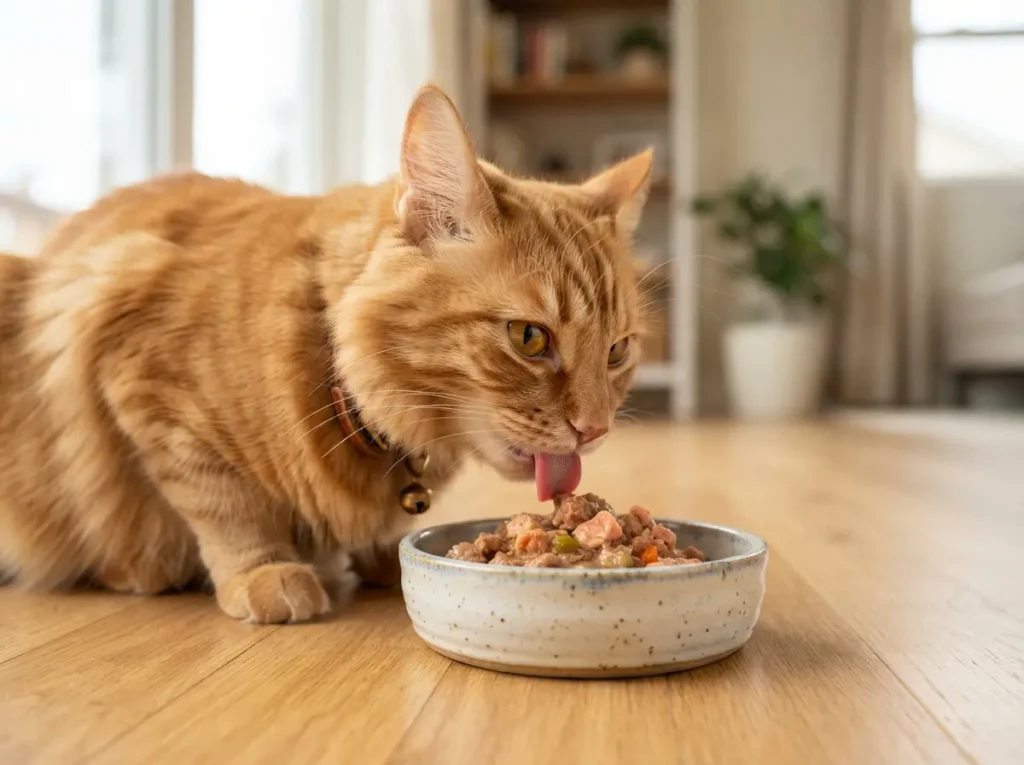
02. Feeding Adult Cats (1 to 7 Years)
Once a cat reaches adulthood, the focus shifts from growth to maintenance. This stage usually lasts the longest, so getting portions and routine right here has the biggest long-term impact.
What to do: Feed a quality adult cat food, split into two measured meals a day rather than leaving food out all the time, and adjust portions based on your cat’s activity level and body condition rather than guessing.
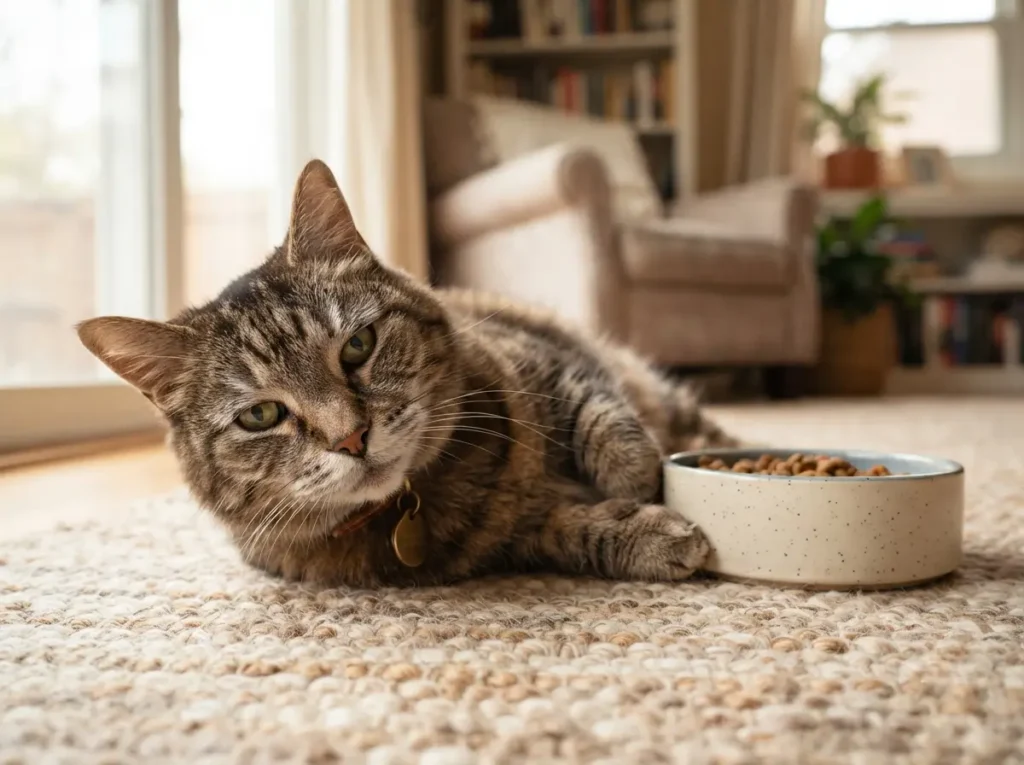
03. Feeding Senior Cats (7+ Years)
Older cats often become less active and can develop issues like kidney problems or reduced appetite, which changes what and how they need to eat. Weight management becomes trickier too, since some seniors gain weight while others start losing it unexpectedly.
What to do: Switch to a senior-formulated food if your vet recommends it, watch for sudden weight changes in either direction, and don’t ignore a senior cat eating noticeably less, since it’s often one of the first signs something’s wrong.
04. Wet Food vs Dry Food: Does It Actually Matter?
This is one of the most common questions new cat owners ask, and honestly, there’s no single right answer; both can work well depending on your cat and your routine.
What to do: Consider mixing both, since wet food helps with hydration, which many cats don’t get enough of, while dry food is more convenient and can support dental health. Whatever you choose, make sure it’s nutritionally complete.
05. Reading Cat Food Labels Properly
Cat food packaging is designed to look appealing, not necessarily to make ingredient lists easy to understand. A good cat nutrition guide wouldn’t be complete without teaching you how to actually read a label. A few basics help you cut through the marketing.
What to do: Look for a named animal protein, like “chicken” or “salmon”, as the first ingredient, and check that the food is labelled as “complete and balanced” according to standards set by the Association of American Feed Control Officials (AAFCO).
06. Foods That Are Dangerous for Cats
Some human foods that seem harmless are genuinely dangerous for cats, and a few can cause serious problems even in small amounts. No cat nutrition guide is complete without a warning list, so worth knowing regardless of your cat’s age.
What to do: Keep onions and garlic, chocolate, grapes and raisins, and raw dough completely away from your cat, and remember that cow’s milk, despite the stereotype, actually upsets most adult cats’ stomachs.
07. Switching Your Cat’s Food Without Upsetting Their Stomach
Cats are notoriously stubborn about food changes, more so than most dogs, and switching too fast often leads to vomiting, diarrhoea, or a cat that simply refuses to eat the new food altogether.
What to do: Transition gradually over seven to ten days, mixing in a little more of the new food each day, and don’t be discouraged if your cat takes a few tries to accept something different.
Cat Nutrition Guide: Quick Checklist
- Feed kittens small, frequent meals with a kitten-specific formula
- Switch to adult food around 12 months with two measured meals a day
- Watch for weight and appetite changes in senior cats
- Mix wet and dry food for hydration and convenience
- Check for a named protein source as the first ingredient
- Keep onions, garlic, chocolate, and grapes out of reach
- Transition between foods gradually over seven to ten days
Also read: Cat Care Guide for Beginners
Also read: Dog Nutrition Guide: What to Feed Your Dog at Every Life Stage
The Bottom Line
The key to good cat nutrition is to match food to life stage, read labels sceptically, and keep an eye out for changes in feeding patterns. This cat nutrition guide isn’t about getting everything perfect – adults require constancy, kittens require fuel for growth, and seniors require more attention to minute changes.
You don’t have to change everything all at once. As your cat progresses through each stage of life, make adjustments based on what is currently in their bowl.